
How Much Debt Does the US Have?
The $39 Trillion Forensic Briefing
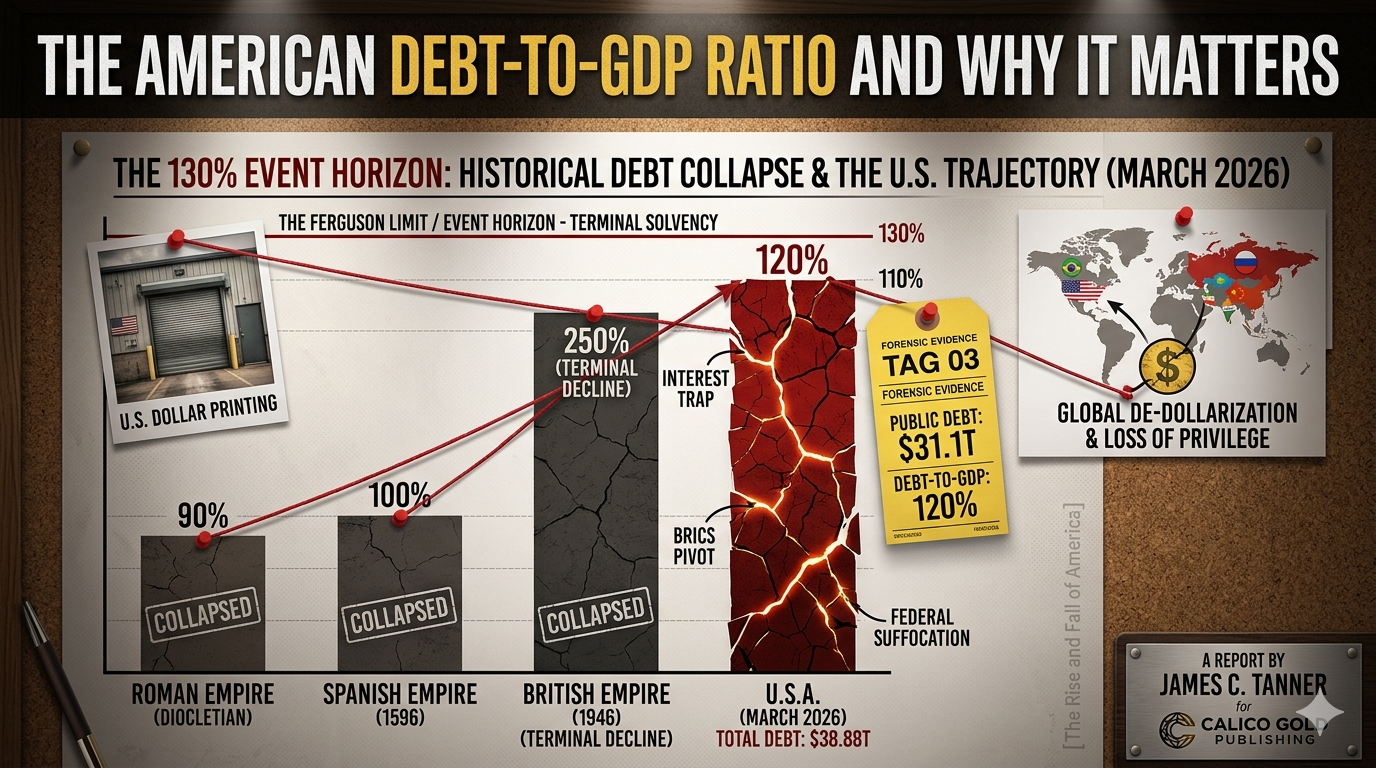
If you want to know how much debt does the US have, you have to look at the numbers in real-time. As of April 2026, the answer is a staggering $39 trillion. To put that into perspective, the U.S. national debt is now larger than the combined economies of China, Japan, Germany, and the United Kingdom. This isn’t just a large number; it is a structural weight that is fundamentally altering the American way of life. When we ask how much debt does the US have, we are really asking how much longer the current system can remain upright before the “Shatter Event” occurs.

“The Rise and Fall of America –
History’s Warning: America in the Crosshairs of Collapse”
Get Your Copy Now — Download Immediately
The paperback edition is available through Amazon, Barnes & Noble, Google Play Books, Apple Books, and wherever books are sold.
The Velocity of the 2026 Crisis
The most alarming aspect of how much debt does the US have is not the total, but the speed of its growth. In the last year alone, the debt increased by an average of $7.23 billion per day. That breaks down to roughly $301 million per hour or $83,720 per second. As I detail in The Rise and Fall of America, this velocity is a mathematical signal of terminal insolvency. We are no longer borrowing for growth; we are borrowing to survive the interest on what we’ve already spent.
The Hidden Burden Per Citizen
When people ask how much debt does the US have, they often forget to translate that into personal liability. With the debt now at $39 trillion, every single person in the United States effectively “owes” approximately $113,000. If you narrow that down to taxpayers, the burden jumps to over $288,000 per household. This is why is the United States in decline? is such a critical question—no household can sustain that level of liability without an eventual reset of the currency.
“The Rise and Fall of America –
History’s Warning: America in the Crosshairs of Collapse”
Get Your Copy Now — Download Immediately
The paperback edition is available through Amazon, Barnes & Noble, Google Play Books, Apple Books, and wherever books are sold.
Where Does the Money Come From?
A key component of understanding how much debt does the US have is knowing who holds the “receipts.” Currently, about 80% of the debt is held by the public—investors, pension funds, and foreign nations like Japan and the UK. However, the BRICS Pivot has significantly reduced the demand for U.S. debt from traditional buyers like China. This lack of external buyers is forcing the Federal Reserve to step in, further complicating the American Debt-to-GDP ratio and why it matters.
The Forensic Verdict
The data is clear: how much debt does the US have is the primary driver of our current economic instability. As we track the US National Debt by Year, the trajectory is vertical. We have reached a point where the “Exorbitant Privilege” of the dollar is being tested by the sheer mass of our liabilities.
“The Rise and Fall of America –
History’s Warning: America in the Crosshairs of Collapse”
Get Your Copy Now — Download Immediately
The paperback edition is available through Amazon, Barnes & Noble, Google Play Books, Apple Books, and wherever books are sold.
Frequently Asked Questions
- What is the total U.S. national debt today? As of April 2026, the total U.S. national debt has officially eclipsed the $39 trillion mark. This represents a monumental increase of over $2.6 trillion in just the last twelve months. The sheer scale of this figure means the government is now managing a debt load that exceeds 120% of the nation’s total annual economic output (GDP).
- Who does the U.S. owe money to? The debt is owed to two main groups: the “Public” (80%) and “Intragovernmental” accounts (20%). Public holders include domestic investors, the Federal Reserve, and foreign nations—primarily Japan and the UK. However, many BRICS nations have begun offloading their U.S. debt, shifting the burden back onto domestic institutions and the Federal Reserve’s own balance sheet.
- How fast is the U.S. debt growing? The debt is currently expanding at a velocity of $7.23 billion per day, which translates to approximately $83,720 every single second. This rate of increase is unsustainable because it far outpaces the growth of the American economy. At this speed, the U.S. adds another trillion dollars to its total debt roughly every 148 to 155 days.
- Which president added the most to the American national debt? Historically, the presidents who oversaw major crises—such as George W. Bush (the 2008 crash) and Donald Trump (the 2020 pandemic)—added the highest percentages. However, in terms of sheer dollar volume, the Biden administration and the current 2026 fiscal cycle have seen the largest absolute increases as the “interest trap” forces the government to borrow trillions just to maintain existing obligations.
- Can the U.S. default on its debt? Technically, a “default” occurs if the government misses a single interest payment. While the 2025 “One Big Beautiful Bill Act” raised the debt ceiling to avoid an immediate 2026 crisis, the long-term risk of a “technical default” remains high. A default would shatter the dollar’s “safe-haven” status, causing global interest rates to skyrocket and equity markets to plummet instantly.
- Will the high American national debt crisis cause high inflation or dollar devaluation? Yes, a high debt load typically leads to dollar devaluation. To manage a $39 trillion debt, the government must effectively “inflate” it away by printing more money, which reduces the purchasing power of every dollar you own. This hidden tax is the primary driver of the cost-of-living crisis many Americans are experiencing throughout the 2026 fiscal reset.
About the Author: James C. Tanner is a special investigator and the owner of Calico GOLD Publishing. For a full forensic breakdown of the 2026 fiscal “snap,” read The Rise and Fall of America—History’s Warning: America in the Crosshairs of Collapse.